

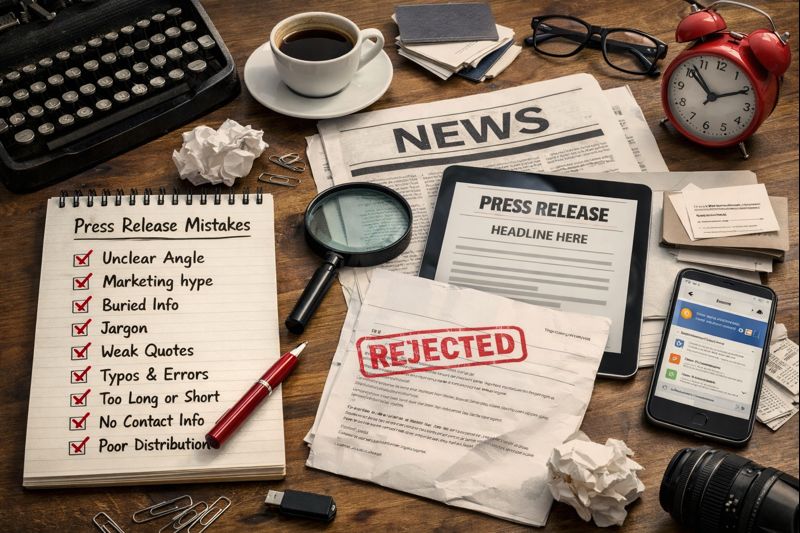
Press releases remain one of the most widely used tools in corporate communication. When executed correctly, they help organizations communicate credibility, announce meaningful developments, and gain media attention. When executed poorly, they are ignored, misunderstood, or even damaging to brand reputation. Despite their importance, many businesses continue to make avoidable mistakes that reduce the effectiveness of their press releases.
This article outlines the ten most common mistakes businesses make in their press releases and explains why these missteps prevent messages from achieving their intended impact.
1. Writing Without a Clear News Angle
One of the most common and costly mistakes businesses make is issuing a press release without a genuine news angle. A press release is not a promotional flyer or an internal memo. It is a news document designed to inform journalists, stakeholders, and the public about something timely and relevant.
Many organizations issue press releases about routine updates, minor internal changes, or self congratulatory achievements that lack public interest. When there is no clear reason why the information matters outside the organization, the release is unlikely to be picked up or read.
A strong press release begins by answering a simple question. Why should anyone care right now. If that question cannot be answered clearly in the opening paragraph, the release likely does not justify publication.
2. Leading With Marketing Language Instead of Facts
Another frequent mistake is opening a press release with marketing language rather than factual information. Phrases that exaggerate value, promise transformation, or position the company as revolutionary often undermine credibility.
Journalists and professional readers are trained to identify promotional language quickly. When a press release reads like an advertisement, it is dismissed as biased and unreliable. Press releases should prioritize verifiable facts such as what happened, when it happened, where it occurred, and who was involved.
Strong releases allow readers to draw conclusions themselves. They do not attempt to persuade through inflated claims or subjective praise.
3. Burying the Main Point Too Deep
Many businesses fail to structure their press releases effectively. They place the most important information several paragraphs into the document, assuming readers will read every word.
In reality, most readers skim. Journalists often decide whether to continue reading within seconds. If the key announcement is not immediately clear, attention is lost.
An effective press release presents the core message in the opening paragraph. Supporting details, background information, and quotes follow afterward. This inverted structure ensures that even a brief scan communicates the main point accurately.
4. Ignoring the Target Audience
A press release should be written with a specific audience in mind. Many organizations attempt to address everyone at once, resulting in vague language and diluted messaging.
Different audiences care about different outcomes. Investors focus on growth and risk. Customers focus on value and reliability. Journalists focus on relevance and impact. When a release does not clearly align with any specific audience, it fails to resonate.
Businesses should define the primary audience before writing. This clarity guides tone, content, and emphasis and increases the likelihood that the message will be understood and shared.
5. Overloading the Release With Jargon
Industry expertise is valuable, but excessive jargon creates barriers to understanding. Many press releases are filled with technical terms, acronyms, and internal language that assumes insider knowledge.
This approach limits accessibility and discourages broader coverage. Journalists may avoid writing about topics they cannot quickly understand. Readers may disengage if they feel excluded or confused.
Clear language does not mean oversimplification. It means explaining concepts in a way that is precise, professional, and accessible to non specialists.
6. Including Weak or Generic Quotes
Quotes are often included in press releases to add authority and perspective. However, many businesses include quotes that add no real value. Generic statements expressing excitement or pride offer little insight and do not advance the story.
Effective quotes provide context, explain significance, or articulate strategy. They sound natural and human rather than scripted. When quotes merely restate facts already presented or rely on vague enthusiasm, they weaken the overall release.
Every quote should earn its place by contributing meaningfully to the narrative.
7. Failing to Proofread and Edit Carefully
Errors in grammar, spelling, and formatting are more than cosmetic issues. They signal carelessness and reduce credibility. A press release with visible mistakes reflects poorly on the organization and may lead readers to question the accuracy of the information itself.
Common issues include inconsistent formatting, incorrect dates, missing words, and unclear sentences. These errors are often the result of rushing distribution without adequate review.
Press releases should undergo careful editing before publication. Reading aloud, reviewing with fresh eyes, and ensuring consistency throughout the document are essential steps.
8. Making the Release Too Long or Too Short
Length is a balancing act. Some businesses write overly long press releases filled with background history, excessive detail, and redundant explanations. Others produce releases that are so brief they lack substance.
An effective press release provides enough information to understand the announcement while remaining concise. It prioritizes relevance and clarity over completeness. Additional details can be provided through links, attachments, or follow up conversations.
The goal is to respect the reader’s time while delivering sufficient context to support coverage or action.
9. Omitting Clear Contact Information
A surprising number of press releases fail to include clear and accurate contact information. Without a designated contact person, journalists and stakeholders cannot ask follow up questions or request clarification.
Contact details should be easy to find and include a name, role, email address, and phone number where appropriate. The contact person should be prepared to respond promptly and provide additional information.
Failing to include this information closes the door on potential opportunities for media engagement.
10. Treating Distribution as an Afterthought
Even a well written press release can fail if distribution is poorly planned. Many businesses rely on mass distribution without considering relevance or timing.
Sending releases to the wrong outlets, at inappropriate times, or without personalization reduces effectiveness. Journalists are more likely to engage with content that aligns with their beat and arrives when it is timely.
Strategic distribution involves understanding where the story fits, who is most likely to cover it, and how to present it professionally. Distribution should be planned as carefully as the content itself.
Why These Mistakes Persist
These mistakes often occur because press releases are treated as routine tasks rather than strategic communication tools. Time constraints, lack of editorial discipline, and misunderstanding of media expectations all contribute to poor execution.
Organizations that view press releases as extensions of marketing materials rather than journalistic documents are particularly prone to these errors.
Improving press release quality requires a shift in mindset. The focus must move from self promotion to clarity, relevance, and credibility.
How Businesses Can Improve Their Press Releases
Avoiding these mistakes begins with preparation. Businesses should define the purpose of each release, identify the audience, and determine whether the information truly qualifies as news.
Strong press releases are written with intention. They are reviewed critically, edited carefully, and distributed thoughtfully. Over time, consistent quality builds trust with media professionals and stakeholders alike.
Press releases may be brief documents, but their impact on brand perception and visibility can be significant.
Final Thoughts
Press releases remain a valuable communication tool when used correctly. The most common mistakes businesses make are not complex or technical. They stem from unclear thinking, misplaced priorities, and lack of attention to detail.
By understanding and avoiding these ten mistakes, organizations can significantly improve the effectiveness of their press releases and strengthen their public communication efforts.
Clear, relevant, and well structured press releases do more than announce news. They demonstrate professionalism, build credibility, and create opportunities for meaningful engagement.