

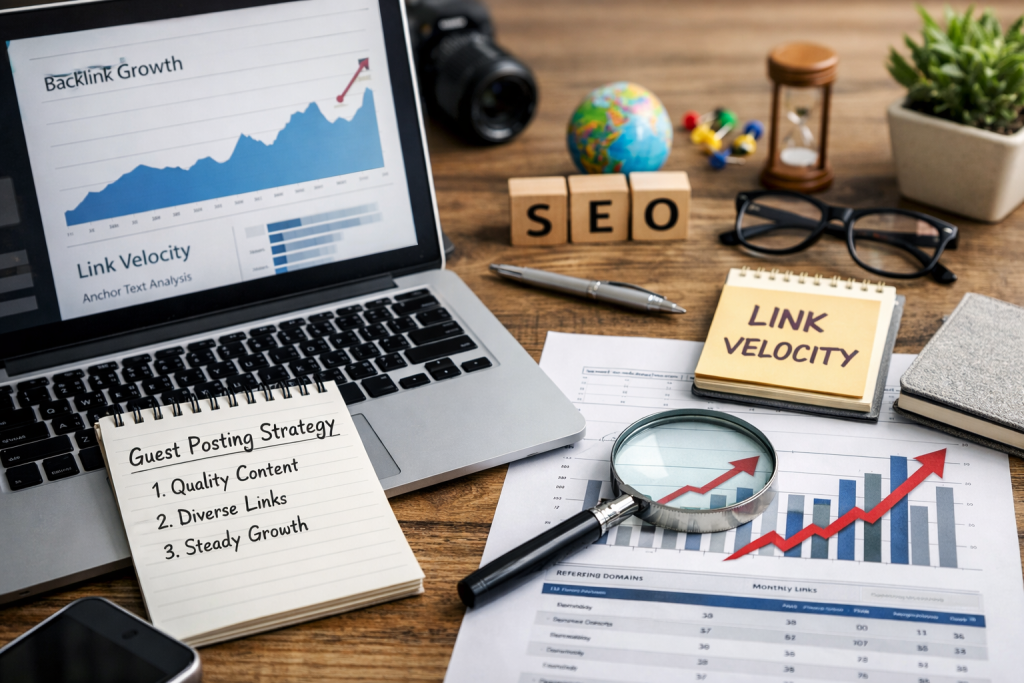
In the evolving landscape of search engine optimization, link building remains one of the most influential ranking factors. Among various strategies, guest posting continues to be widely adopted due to its ability to combine authority building, brand exposure, and traffic generation. However, one aspect that is often misunderstood or overlooked is link velocity.
Link velocity refers to the rate at which a website acquires backlinks over a given period. While acquiring backlinks is essential, the speed at which they are built can significantly impact how search engines interpret a website’s growth. When it comes to guest posting, the question is not simply how many links to build, but how fast those links should be acquired.
This article explores the concept of link velocity in guest posting, the risks of building links too quickly, the indicators of a natural growth pattern, and practical strategies to maintain a sustainable pace.
Understanding Link Velocity
Link velocity is the measure of how quickly backlinks are gained over time. It is not just about the total number of links but the pattern in which they appear. Search engines analyze these patterns to determine whether link acquisition appears natural or manipulated.
A steady increase in backlinks over time signals organic growth, often associated with valuable content and genuine outreach. On the other hand, sudden spikes in link acquisition may raise concerns, especially if they lack contextual relevance or diversity.
In guest posting, link velocity becomes even more critical because the links are intentionally placed. This means that patterns can easily appear artificial if not managed carefully.
Why Link Velocity Matters in Guest Posting
Guest posting is inherently a controlled activity. Unlike organic backlinks that come from spontaneous mentions, guest posts are planned, executed, and often scaled. This introduces a higher level of scrutiny from search engines.
A natural backlink profile typically shows:
Consistent growth over time
Variation in link sources
Diversity in anchor text
Relevance across topics
If a website suddenly gains a large number of guest post links within a short time frame, it may signal manipulation. This is particularly true if those links come from similar types of websites or share repetitive patterns.
Search engines aim to reward authenticity. When link velocity appears unnatural, it may trigger algorithmic filters that reduce ranking potential rather than enhance it.
How Fast Is Too Fast?
There is no universal number that defines excessive link velocity. The acceptable pace depends on several factors, including the age of the website, its existing authority, and its historical link acquisition patterns.
However, certain scenarios clearly indicate that link velocity may be too aggressive:
Sudden Spikes Without Context
If a new or relatively unknown website suddenly acquires dozens of guest post links within a few days, it creates an unnatural signal. Without viral content or major brand exposure to justify the spike, this pattern appears artificial.
Lack of Historical Consistency
If a website previously gained one or two links per month and suddenly jumps to twenty or thirty, the inconsistency becomes a red flag. Search engines expect gradual progression rather than abrupt changes.
Uniform Link Sources
Publishing multiple guest posts on similar websites within a short period can amplify the problem. Even if the sites are legitimate, the lack of diversity can indicate a coordinated effort rather than organic growth.
Repetitive Anchor Text Patterns
If multiple guest posts use similar anchor text in a short span, it strengthens the signal of manipulation. This is especially risky when targeting commercial keywords.
The Risks of Building Links Too Quickly
Building links too quickly through guest posting can lead to several negative outcomes.
Algorithmic Devaluation
Search engines may choose to ignore or discount links that appear unnatural. This means the effort invested in guest posting yields little to no benefit.
Ranking Instability
Rapid link acquisition can sometimes result in short term ranking gains followed by sudden drops. This volatility often indicates that the link profile lacks stability.
Increased Scrutiny
Websites with aggressive link velocity may be subjected to closer algorithmic evaluation. This can affect not only new links but also existing ones.
Long Term Trust Issues
Trust is built over time. When a website exhibits unnatural growth patterns, it may struggle to establish credibility, even if future efforts are more balanced.
What Does Natural Link Velocity Look Like?
A natural link velocity pattern reflects how a real brand or website would grow in visibility and recognition.
Gradual Growth
Links are acquired steadily over weeks and months. There are no sharp spikes or unexplained surges.
Context Driven Increases
Occasional increases in link acquisition are supported by events such as content campaigns, product launches, or media coverage.
Diverse Sources
Links come from a variety of websites, including blogs, news platforms, forums, and niche communities.
Mixed Strategies
Guest posting is only one part of the strategy. Other methods such as content marketing, digital public relations, and organic mentions contribute to the overall link profile.
Factors That Influence Safe Link Velocity
Determining a safe link velocity requires understanding the context of the website.
Website Age
Older websites with established authority can sustain higher link acquisition rates without raising concerns. New websites should adopt a slower and more cautious approach.
Existing Authority
Websites with strong domain authority and existing backlinks can handle faster growth. However, even in such cases, consistency remains important.
Industry Competitiveness
Highly competitive industries often have faster link building activity. However, this does not justify unnatural spikes. The key is to match the pace of competitors without exceeding realistic limits.
Content Quality
High quality content naturally attracts links. If a website publishes exceptional content, a higher link velocity can be justified. In guest posting, this means contributing genuinely valuable insights rather than thin content.
Best Practices for Managing Link Velocity in Guest Posting
Maintaining a balanced link velocity requires strategic planning and disciplined execution.
Start Slow and Scale Gradually
Begin with a modest number of guest posts per month. As the website gains authority and recognition, gradually increase the pace.
Maintain Consistency
Consistency is more important than volume. It is better to publish a steady number of guest posts each month than to alternate between inactivity and aggressive bursts.
Diversify Link Sources
Avoid relying solely on guest posting. Incorporate other link building methods to create a more natural profile.
Vary Anchor Text
Use a mix of branded, generic, and contextual anchor text. Avoid repeating the same keywords across multiple guest posts.
Focus on Relevance
Publish guest posts on websites that are relevant to your niche. Relevance strengthens the credibility of the link and reduces the risk of appearing manipulative.
Monitor Link Growth
Regularly track the number and quality of backlinks. Identify patterns and adjust your strategy if growth appears too aggressive.
Common Mistakes to Avoid
Even experienced practitioners can fall into patterns that harm link velocity.
Over Scaling Too Quickly
Scaling guest posting efforts without considering link velocity is a common mistake. Growth should be intentional and measured.
Ignoring Link Quality
Focusing solely on quantity leads to poor outcomes. Low quality links acquired quickly can be more harmful than beneficial.
Using Identical Outreach Templates
Repetitive outreach often results in similar placements, which can create patterns in link acquisition.
Neglecting Content Value
Guest posts should provide genuine value. Thin or generic content reduces the effectiveness of the link and increases risk.
Measuring and Adjusting Link Velocity
Effective management of link velocity requires ongoing evaluation.
Track Monthly Link Acquisition
Monitor how many links are acquired each month. Look for steady growth rather than sudden increases.
Analyze Source Diversity
Evaluate the range of domains linking to your website. A diverse profile indicates natural growth.
Review Anchor Text Distribution
Ensure that anchor text remains varied and balanced. Over optimization is a common trigger for penalties.
Compare with Competitors
Analyze the link velocity of competitors to understand industry norms. This helps establish realistic benchmarks.
The Balance Between Growth and Safety
Link building is ultimately about balance. While it is tempting to accelerate growth through aggressive guest posting, sustainability should always be the priority.
A slower, consistent approach builds a strong foundation that supports long term rankings. Rapid growth, on the other hand, often leads to instability and risk.
Guest posting should be viewed as part of a broader strategy rather than a standalone solution. When combined with high quality content and organic promotion, it contributes to a natural and resilient backlink profile.
Conclusion
Link velocity in guest posting is a critical factor that influences how search engines interpret a website’s growth. There is no fixed number that defines the ideal pace, but the principles of consistency, relevance, and diversity remain universal.
Building links too quickly can lead to devaluation, instability, and long term trust issues. On the other hand, a measured and strategic approach creates a sustainable path to higher rankings.
The key is to align link building efforts with natural growth patterns. By focusing on quality, maintaining consistency, and avoiding abrupt spikes, websites can leverage guest posting effectively without compromising their credibility.